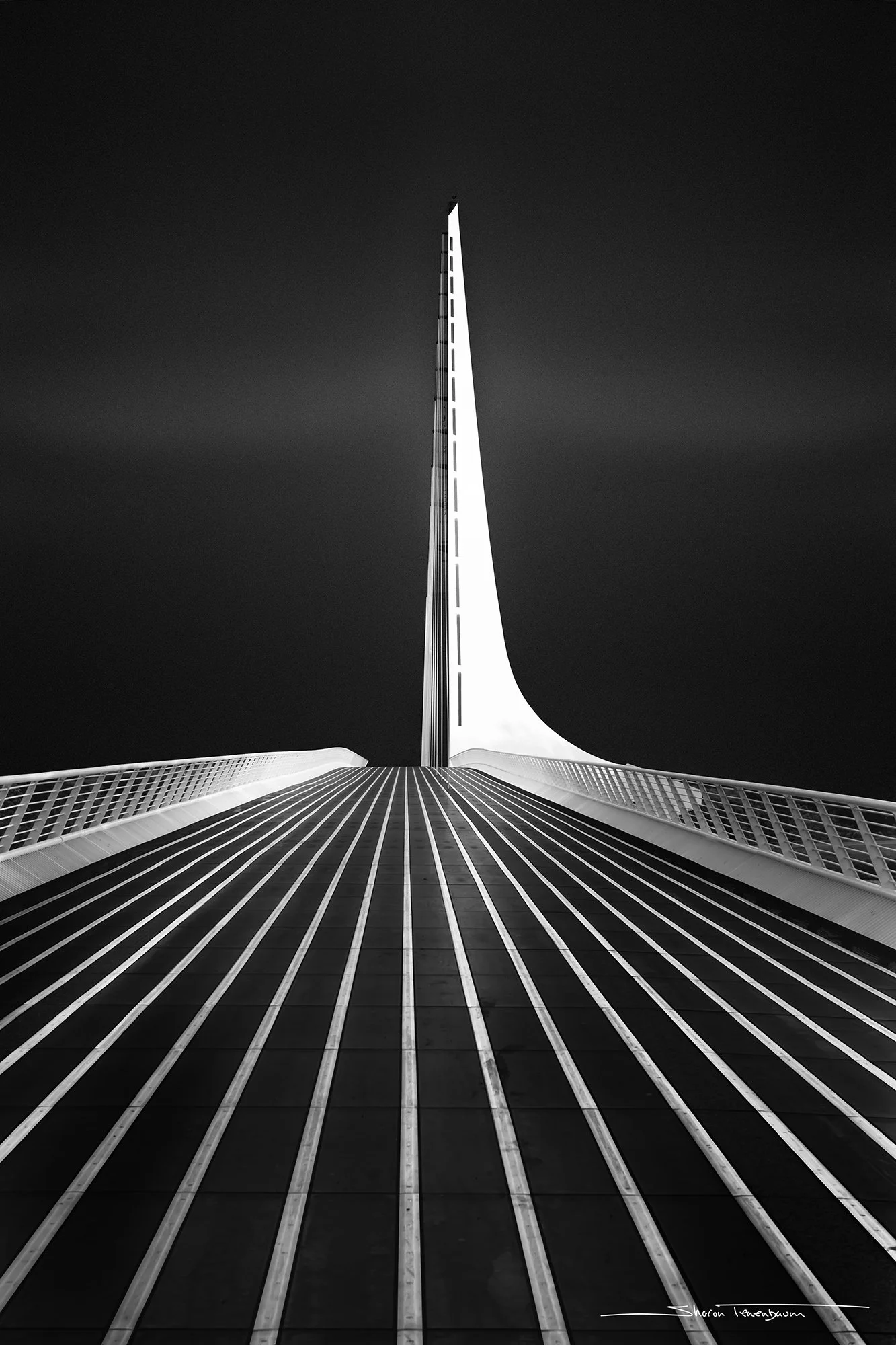
LEADING LINES
Leading lines are one of the most powerful tools we can use to guide the viewer through an image. They can be obvious, such as roads, pathways, architectural lines, or railings, but they can also be much more subtle, created through light, shadow, colour, tonal changes, or the arrangement of subjects.
Pay particular attention to how your lines move through the frame. Think about the journey from foreground to background and how you can use that progression to create depth and lead the viewer toward your main subject or focal point. A strong foreground can draw the viewer into the image, while carefully placed lines can then carry their eye deeper into the scene.
Tonal range can also play an important role. A line doesn't necessarily have to be physical. A transition from dark to light, or a change in contrast, can create a visual pathway that guides the eye. Gradient lighting can be particularly effective for this, allowing you to subtly control where the viewer looks and strengthen the visual flow of the image.
But don't simply look for lines and photograph them. Consider how the lines contribute to the overall composition and, most importantly, the story. Ask yourself where you want the viewer's eye to go and why. Use leading lines intentionally to create depth, movement, balance, and visual interest, while allowing them to support rather than overpower the story you're trying to tell.