

SHADOWS
Shadows are far more than the absence of light—they are a powerful compositional element that can add mystery, drama, depth, and graphic impact to your photographs. Often, it is the shadow itself, rather than the object casting it, that becomes the true subject of the image.
Success with shadow photography begins with recognizing form. Look for strong shapes, clean lines, interesting patterns, and the relationship between light and dark. Shadows have the ability to simplify a scene, reveal hidden geometry, or transform an ordinary subject into something abstract and intriguing.
Timing is equally important. Early morning and late afternoon produce long, elegant shadows that stretch across the landscape, emphasizing depth, texture, and leading lines. In contrast, the harsh overhead light of midday—often avoided by photographers—can create bold, high-contrast shadows with crisp edges, making it ideal for graphic compositions and minimalist imagery. Neither approach is better than the other. There is no right or wrong here—you make the rules. The challenge is to recognize the unique opportunities that each quality of light presents and use them to support your creative vision.
Whether your images are realistic or abstract, subtle or dramatic, the strongest shadow photographs are those where light, form, and composition work together to create an image that invites the viewer to look a little longer.
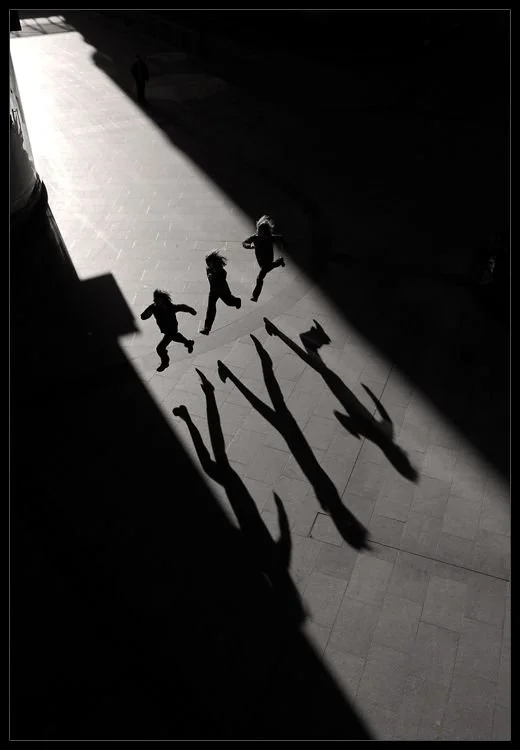
Shadows by Laurent Filoche
Registration is Now Closed. Please come back at 2:00 pm PST to register for next week’s session.